
Electrical Safety Solutions for Pulp & Paper Mills
Solutions built for the demands of pulp and paper operations.
Electrical Reliability is a Production Problem, Not Just a Safety Problem
Ground faults are the leading cause of unplanned electrical outages in industrial facilities. Up to 95% of electrical outages trace back to a ground fault, and a single electrical accident can cost a facility $1 million or more in lost productivity, equipment damage, downtime, and liability exposure.
For a pulp and paper mill, that risk sits underneath some of the most capital-intensive equipment on the site: large low-voltage motors, drives, and the switchgear feeding them. A ground fault that isn’t cleared before a second one occurs can propagate into a phase-to-phase fault and arc flash event. Up to 70% of all electrical faults begin exactly this way, as a single-phase-to-ground fault.
One I-Gard’s customer’s own data shows what that looks like in practice: after installing high-resistance grounding, motor failure and repair costs on affected substations dropped from a peak of $301,750 in a single year to near zero within several years.
Want to see what this could mean for your facility?
Use our downtime cost calculator to estimate the cost of ground-fault-driven downtime and motor failure at your own facility.
Indicative only. Your own production and maintenance records are the better input; an engineer can work through them with you.
Electrical Challenges in Pulp & Paper
Continuous Production
A single unplanned outage can idle an entire line. Paper machines, digesters, and drive systems don’t tolerate unplanned trips well, and restart costs compound the lost production time.
Personnel Safety Around Large Motors and Switchgear
Maintenance and electrical teams routinely work near large low-voltage motors and MV switchgear. They need a way to confirm equipment is de-energized without opening a live enclosure or placing a meter inside the hazard boundary.
Arc Flash Risk
Ground faults that go undetected or unmitigated can escalate into an arc flash, the primary burn hazard for anyone working on or near electrical systems.
Idle Equipment During Scheduled Outages
Mills schedule planned shutdowns for maintenance. While motors and generators sit idle, insulation can absorb moisture and degrade silently leaving the problem to surface at the hi-pot test before restart where there is no time left to fix it.
Supporting Compliance & Best Practices
Pulp and paper electrical systems are commonly designed and maintained with reference to:
Always consult applicable standards and project requirements when designing electrical systems.
Reliability Starts with Visibility
Proper grounding and continuous monitoring helps mills:
In a pulp and paper mill, the electrical system is what stands between a scheduled production run and an unplanned line-down event. By combining grounding technologies with continuous monitoring, operators gain the ability to catch problems before they interrupt a run and continue running even if a fault does occur.
Built for Continuous Operation
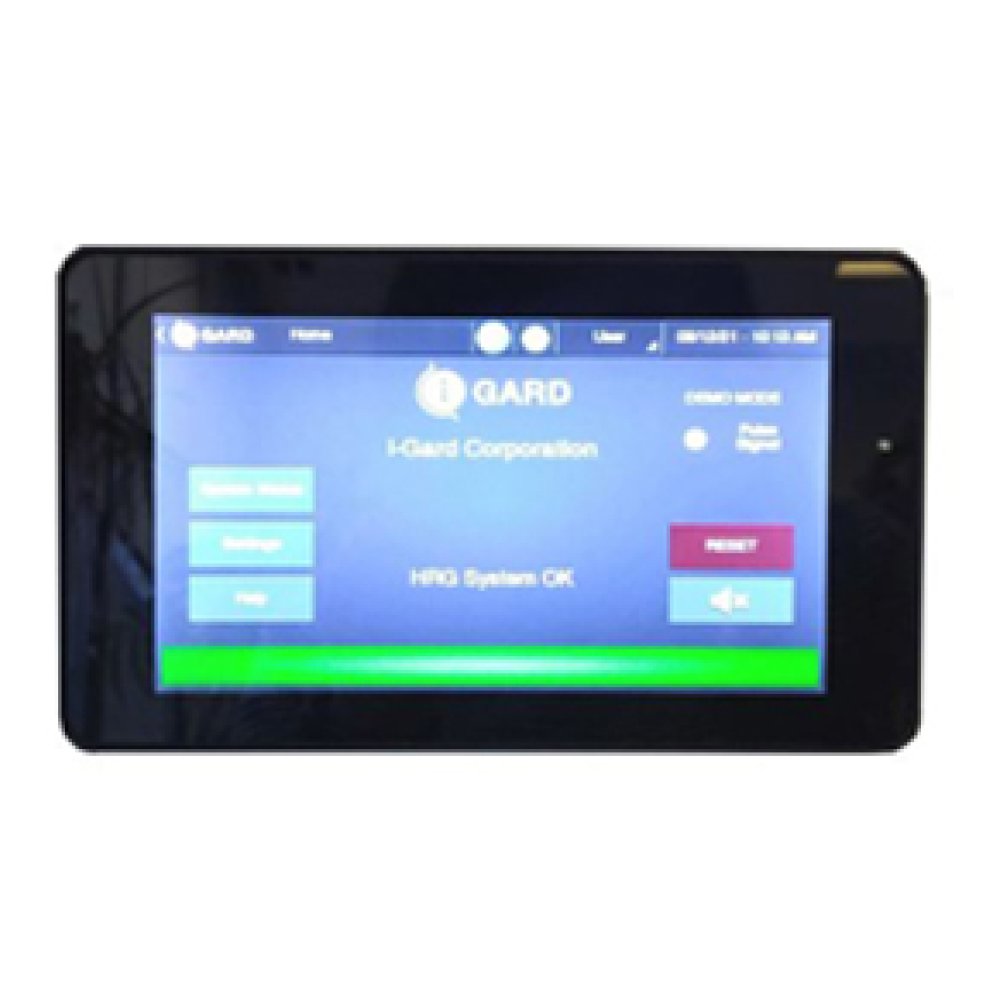
A high-resistance grounding system with twin resistance paths. If one resistor path fails, the second continues to limit the ground fault to half the predetermined level and still provides full ground fault protection (with an alarm to indicate the failure). Pairs with a ground fault and resistor integrity relay that discriminates between a ground fault, a resistor failure, and an open or short circuit.
Used in mills that cannot tolerate losing ground fault protection mid-run such as paper machines digesters, and other continuous processes where swapping to a backup path without stopping matters more than anywhere else in the plant.
Primary Benefit: Keep running through a first ground fault and a resistor failure.
Detects and locates ground faults with assisted fault-finding and pulsing capability. Cyclical pulsing (100%/75%/50% of available fault current) combined with a hand-held pulse-tracing sensor lets maintenance staff trace a fault to its exact location without de-energizing the load.
Used in high-resistance grounded distribution feeding switchgear, motor control centers, and process equipment where locating a fault fast and without shutdown is the priority.
Primary Benefit: Cut fault-location time from several shifts down to a few hours.
Control fault current levels and help protect generators, transformers, and critical electrical infrastructure from damaging ground-fault conditions.
Used on motor and generator neutrals, transformers, and medium-voltage distribution feeding large drives.
Primary Benefit: Reduce winding and insulation stress that drives motor failure and repair costs.
Protect grounding resistors and associated equipment from transient over voltages caused by switching events, lightning activity, and other electrical disturbances. By limiting damaging voltage spikes, the ZORC helps improve the reliability and longevity of critical power system components.
Used on large motors and VFD-fed drives common in pulp and paper process lines.
Primary Benefit: Protect motor and transformer insulation from switching-transient damage that standard arresters don’t fully address
Provide permanently mounted absence-of-voltage verification, allowing qualified personnel to confirm equipment is de-energized before opening electrical enclosures.
Used on switchgear and MCCs where maintenance activity is frequent.
Primary Benefit: Removes the highest-risk step in lockout/tagout.
Continuously test winding insulation while a motor or generator is offline through a scheduled outage rather than only at the pre-restart test.
Used for motors and generators taken out of service during planned shutdowns.
Primary Benefit: Catch insulation degradation while there’s still time to dry it out, instead of discovering it at the hi-pot test with the outage clock already run out.
A known trade-off, stated plainly.
High-resistance grounding removes the neutral from service, so line-to-neutral loads need isolation transformers to stay served.
Case Study
Packaging Corporation of America — Valdosta, GA
Packaging Corporation of America (PCA), the fifth largest producer of containerboard and corrugated packaging products in the U.S., producing over 2.4 million tons of kraft linerboard annually across four mills experienced a ground fault at its Valdosta, Georgia facility. Because the mill had already deployed a high-resistance grounding system, it avoided what could have been a costly outage. The remaining challenge was locating and clearing the fault before a second one occurred, a scenario that could have led to unwanted process interruptions or an arc fault.
With training from I-Gard on its DSP relay’s assisted fault-finding and pulsing capability, PCA reduced fault location time from several shifts to a few hours.
As a further reliability upgrade, PCA’s Senior Project Electrical Engineer, George Lavender, worked with I-Gard’s Vice President of Engineering, Sergio Panetta, to select the I-Gard GEMINI fail-safe HRG system.

Reducing Arc Flash Risk: A Real Two-Pronged Approach
When one pulp and paper mill converted its solidly grounded low-voltage transformers to high-resistance grounding, the project team, recognizing that HRG addresses probability, not severity, paired it with a second set of measures aimed specifically at reducing incident energy if a fault did occur:
High-resistance grounding on all low-voltage transformers, to reduce the probability of a ground fault escalating into an arc flash. Per IEEE 1584-2018, this does not increase arc flash incident energy.
Low-voltage power circuit breaker digital relays for tighter tripping control.
Electronic protection relays on lowvoltage substations, with Maintenance Mode switches for reduced-energy operation during service work.
15kV primary fuses with faster trip curves.
HRG reduces the probability of an arc flash; a separate set of mitigation measures reduces the incident energy if one still occurs. Together, this facility saw a dramatic increase in power continuity through ground faults, plus an unexpected drop in motor failure and repair costs tied to reduced electrical stress on the system.
Why Pulp & Paper Mills Choose I-Gard
For more than 40 years, I-Gard has helped organizations improve electrical safety, system reliability, and operational performance through engineering-driven solutions for critical power applications. By manufacturing both the current-limiting resistor and the ground fault relay in-house, we deliver fully integrated systems that are tested together.
Our engineering team works directly with mill electrical engineers to design grounding and monitoring systems around the realities of continuous process operation including the fault-location speed, redundancy, and idle-equipment protection that matter most in this industry.
From specification support and system design through training and commissioning, we stand behind every solution we provide.
Build a More Reliable Pulp & Paper Electrical Infrastructure
Whether you’re converting an existing solidly grounded system, adding redundancy to a critical process line, or protecting motors through a planned outage, I-Gard can help identify the right electrical safety and reliability solutions for your mill.