
Electrical Safety Solutions for Petrochemical Facilities
High-resistance grounding has become the industry standard for a reason. Engineered electrical safety solutions help petrochemical facilities keep critical processes running through a ground fault, protect the people working on live equipment, and reduce the risk of an arc flash before it starts.
The Importance of Preventing Downtime in Petrochemical Plants
Petrochemical plants run on tight production schedules, where output is committed to customers, pipelines, and downstream units long before it is made. When a process stops unexpectedly, the impact goes well beyond the hours of lost production. Restarting a unit safely can take days, shipments and turnaround schedules slip, and contractual deadlines can be missed. An unplanned outage can also cause a complete plant upset, create personnel and equipment safety concerns, and have adverse environmental impacts. That is why a safe and reliable power source is essential: keeping critical processes running through an electrical fault is what allows a facility to meet its commitments.
High-resistance grounding addresses this risk at the source. By limiting ground-fault current to a low, controlled level, an HRG system prevents a first ground fault from escalating into a damaging phase-to-phase fault or arc flash event. Instead of tripping, the system alarms and continues operating, so critical processes keep running while maintenance locates and clears the fault on a planned basis. Avoiding even a single unplanned shutdown can save a facility the cost of lost production, a lengthy restart, and missed commitments, making HRG one of the most cost-effective reliability improvements a petrochemical plant can make.
Want to see what this risk is worth for your facility?
Use our downtime cost calculator to estimate the cost of an unplanned low-voltage outage at your site.
Indicative only. Environmental and regulatory consequences are not priced here, and in this industry they are often the larger number.
Electrical Challenges in Petrochemical Facilities
Process Continuity
An unplanned loss of low-voltage power can shut down an entire process train, not just the circuit where the fault occurred.
Personnel Safety
Workers need to confirm equipment is de-energized, potentially exposing themselves to live parts to prove it.
Environmental and Regulatory Exposure
An uncontrolled electrical upset in a petrochemical facility can carry consequences beyond the plant fence, including environmental impact and regulatory exposure.
Arc Flash and Equipment Damage
An undetected ground fault can escalate into an arc flash or destroy switchgear, motors, and transformers which are costly and slow to replace.
Supporting Compliance and Best Practices
Petroleum and chemical facility electrical systems are commonly designed and maintained with reference to the following:
Always consult applicable standards and project requirements when designing electrical systems.
High-Resistance Grounding of Low-Voltage Systems: A Standard for the Petroleum and Chemical Industry
Petroleum and chemical facilities have tried all three major grounding approaches, and each one has a known failure mode. An ungrounded system makes a line-to-ground fault difficult to locate, stays exposed to transient overvoltages, and turns a second ground fault on another phase into a phase-to-phase short circuit that damages equipment.
A solidly grounded system allows high fault current, which causes severe equipment damage when a fault does occur, and it is prone to protective device miscoordination. A ground fault on a downstream circuit can trip the main breaker instead of the smaller branch breaker it was meant to trip, shutting down far more of the plant than the fault required.
A high-resistance grounded (HRG) system limits ground fault current to a low, controlled value, low enough that there is not enough energy for the fault to sustain an arc and escalate. This keeps the process running through a first ground fault, avoids the transient overvoltage problems of an ungrounded system, and avoids the fault current and miscoordination problems of a solidly grounded system.
|
Requirement
|
Ungrounded
|
Solidly Grounded
|
High-Resistance Grounded
|
|---|---|---|---|
|
Process continuity under a ground fault condition |
No |
No |
Yes |
|
Control of transient overvoltages |
No |
Yes |
Yes |
|
Ability to locate a ground fault |
Difficult |
Not applicable, fault trips immediately |
Yes, with pulse locating |
|
Fault current limited to a safe level |
No |
No |
Yes |
|
Reduced likelihood of an arc flash |
No |
No |
Yes |
Standard HRG solves the problem, however it still leaves three things unaddressed on its own. It does not offer a trip delay option after a first fault, it does not keep a critical process running through a second fault, and it does not reduce the incident energy of an arc flash if one occurs.
How I-Gard addresses these concerns
Closing the Remaining Gaps: High-Resistance Grounding
-
Continuous resistor monitoring
Advanced HRG verifies the grounding resistor itself is intact, not just the fault condition. Under normal load, the relay measures the leakage current and voltage across the resistor to calculate its apparent resistance. If the leakage current is too low to measure this way during low-load conditions, the relay switches to an injection mode, applying a small high-frequency signal to confirm the resistor is still connected from neutral to ground. Either way, a resistor failure is caught before it is needed, not after.
-
Adjustable trip delay after first fault
Rather than trip immediately, or let a fault linger indefinitely, advanced HRG systems let facilities choose an alarm-only setting or a trip delay ranging from one second to ninety-nine hours on the faulted feeder, so maintenance can plan the response instead of reacting to an unplanned trip.
-
Uninterrupted operation through a second fault
Advanced HRG lets facilities assign priority to up to fifty feeders. If a second ground fault occurs on a different phase, the lower-priority feeder is isolated within 100 milliseconds, while the higher priority feeder keeps running. A second fault that would otherwise force a full plant shutdown instead takes down the process that was predetermined.
-
Reduced incident energy through arc detection
For facilities looking to reduce the magnitude of an arc flash, not just probability, an optional arc detection model adds arc flash detection on top of the ground fault relay.
Hybrid Grounding for Generators
Petrochemical facilities commonly run on-site generators which fail differently than transformers. Even after the breaker opens, a generator can continue feeding a fault on its own windings from ground current contributed by the rest of the system, whether that contribution comes from another source on the network or from the generator’s own internal grounding.
Hybrid grounding combines a low-resistance path with a high-resistance path so that residual current collapses quickly once the breaker opens, protecting the stator windings from damage that a standard grounding approach would not catch in time.
Reducing Incident Energy When an Arc Flash Still Occurs
An arc flash is the rapid release of energy from an arcing fault between phases, between a phase and neutral, or between a phase and ground. It behaves like a discharge of electricity between two or more conductors, releasing large amounts of pressure, heat, and light all at once. The energy released is proportional to the voltage, the current, and how long the arc is allowed to burn. An arc flash can quickly turn into a large fire next to highly flammable materials in petrochemical facilities, which can be detrimental to the equipment and the people in the facility.
Fortunately, we are able to cut the duration of an arc using innovative technology. An arc propagates at roughly 30 meters per second, burning and consuming whatever is in its path for as long as there is enough power to keep it sustained. The faster an arc flash is tripped, the less energy gets released.
This is the same distinction carried throughout each system. High-resistance grounding reduces the probability that a ground fault escalates into an arc flash in the first place. Arc flash relays address the fault duration if an arc flash still occurs, and duration is what drives incident energy. I-Gard offers two arc flash relays, and the choice between them depends on how a facility wants to add this protection to their system.
Ground fault relay first
Sentri
Sentri is a ground fault relay first, with arc flash detection built in. It fits a facility that wants arc detection added to the ground fault protection it already needs, in a single relay.
Dedicated arc detection
Arc-i-TEC
Arc-i-TEC is a dedicated arc detection system. Arc-i-Tec initiates a trip signal in about one millisecond and provides four independent arc detection contacts so that a specific zone can be isolated without tripping the main breaker. This important feature prevents miscoordination, a common risk in petrochemical facilities.
Detect Faults Instantly
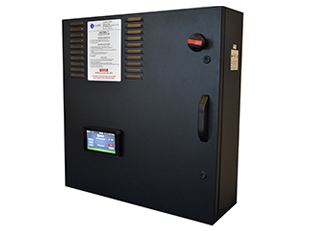
High Resistance Grounding
Limits ground-fault current to a low, controlled level so the first ground fault does not trip the process offline, while alarming personnel and allowing the fault to be located with pulse tracing.
Used on low and medium voltage distribution feeding process units, motors and critical loads where an unplanned shutdown is costly or unsafe.
Primary Benefit: Reduces the likelihood of an arc flash from a ground fault and keeps the process running while the fault is found and cleared.

Absence of Voltage Testers
Provides permanently mounted absence-of-voltage verification, allowing qualified personnel to confirm equipment is de-energized before opening electrical enclosures.
Used on switchgear, MCCs, and other enclosures where lockout and tagout is performed regularly.
Primary Benefit: Removes the highest-risk step in LOTO. A worker no longer has to expose live parts to prove they are dead.

Voltage Indicators
Indicate the presence of voltage on each phase and ground through redundant LEDs and provides high-impedance protected test points for measuring voltage without opening the panel door.
Used on panels and equipment where troubleshooting requires checking voltage without a full lockout and tagout procedure.
Primary Benefit: Supports troubleshooting, such as diagnosing a motor that will not start, without exposing the worker to the hazard boundary. It does not establish an electrically safe work condition on its own.
Arc Flash Relays
Detects an arcing fault and trips a breaker fast enough to cut the incident energy released. See the dedicated section above for how the two relays differ and what the speed difference is worth in cal per square centimeter.
Used on switchgear and circuits where a facility needs to reduce incident energy, on top of whatever ground fault or overcurrent protection is already in place.
Primary Benefit: Reduces the incident energy of an arc flash that is already in progress.

ZORC Surge Suppression
Protects grounding resistors and associated equipment from transient over voltages caused by switching events, lightning activity, and other electrical disturbances. By limiting damaging voltage spikes, the ZORC helps improve the reliability and longevity of critical power system components.
Used on motor, transformer, and generator systems fed through vacuum switching, common throughout petrochemical process equipment.
Primary Benefit: Protects insulation from repeated transient stress that can lead to eventual failures, even when nothing fails immediately.
Why Petrochemical Facilities Choose I-Gard
I-Gard is the only manufacturer in North America that builds both the current-limiting resistor and the ground fault relay in-house. The resistor and relay arrive as a single system that has already been tested together, instead of two components that are specified separately and meet for the first time on site.
For more than 40 years, I-Gard has helped organizations across heavy industry improve electrical safety, system reliability, and operational performance through engineering-driven solutions built for critical power applications. From specification support and system design through training and commissioning, I-Gard stands behind every solution.

Application questions?
Build a More Reliable Petrochemical Electrical Infrastructure
Whether your facility is converting from a solidly grounded system, adding second-fault protection to a critical process line, or protecting generators and personnel across a large site, I-Gard can help identify the right electrical safety and reliability solution.